
The Generation Myth: Why Filial Numbers Still Matter to Savannah Buyers
October 28, 2026 · 6 min read
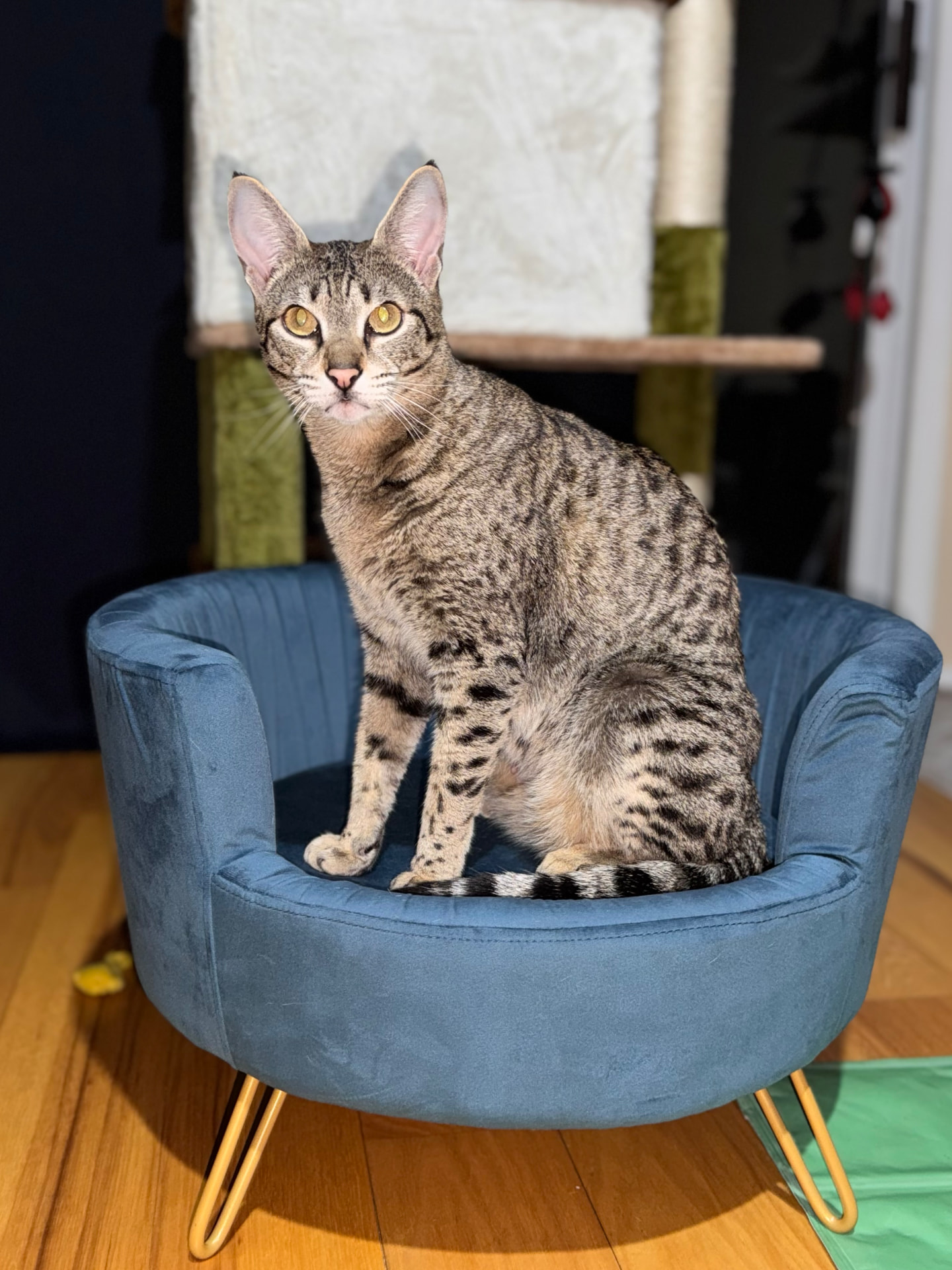
Hello, Savannah lovers and prospective buyers — thank you for taking the time to read this.
A blog post is circulating claiming that because 40 years have passed, filial numbers (F4, F7, etc.) no longer matter. The argument claims that once a cat achieves SBT (Stud Book Traditional) status, all generations look and behave identically, and that tracking generation numbers is just a marketing gimmick to inflate costs.
However, flat-out calling them just "SBT" and pretending filial numbers no longer matter at all is biologically false and highly dangerous for buyers. Phenotype — how a cat looks — does not erase genotype — the cat's actual genetic map.
1. Phenotype is not genotype
An F4 and an F8 might meet the exact same breed standard, carry the same value, and look remarkably similar. But they are not genetically identical.
- The sterility funnel: Male Savannahs are sterile in early generations (F1–F3) and highly infertile at F4 and F5. Every single bloodline must pass through this narrow genetic funnel.
- The genetic map: An F4 cat sits just a few generations away from that completely sterile line. An F8 or F12 is much further down. Their chromosome distribution and genetic distance from the Serval ancestor are entirely different.
Saying an F4 and an F25 are the exact same ignores basic hybrid genetics. The numbers are an honest map of a cat's heritage, not a quality score.
2. The direct risks to buyers
When a breeder completely erases filial numbers under the guise that "they are all just interchangeable SBTs," the buyer inherits severe practical risks:
- Legal risk: Many states, counties, and cities regulate Savannah ownership strictly by filial generation. If a breeder tells you the number doesn't matter and you buy an F4 in an area where only F5 or later is legal, you could legally lose your cat.
- Temperament and energy mismatches: While they are all Savannahs, higher generations are typically more adapted to standard domestic life. Lower generations can carry much more demanding, high-energy traits and specific environmental needs. Buyers need the filial number to properly prepare their households.
- Lack of transparency: If a breeder hides the generation, you lose the ability to see if the cat comes from a healthy A, B, or C outcross track used to keep the gene pool viable. "SBT" is a registration label — it is not the whole story.
3. The Bengal warning & the Serval shortage
We have already seen what happens when breeders close lines to rush into a simplified "purebred" pool while ignoring generation tracks. Bengal breeders did this, resulting in:
- Severe defects: Inbreeding within tight lines amplified genetic blindness (PRA) and painful skeletal issues.
- Loss of type: Highly inbred Bengals shrank and lost their exotic structure, eventually resembling ordinary housecats.
- Shelter overpopulation: Severe behavioral anxieties spiked, flooding rescue shelters with abandoned animals.
This risk is magnified by a massive shortage of fertile African Servals in the U.S. Because importing is restricted, most lines trace back to the exact same few studs. If breeders stop tracking generations and shut down the helper tracks (A, B, and C), the Savannah breed will hit a genetic bottleneck that ends in sick cats and crowded shelters.
What buyers must ask
Do not buy a label alone. Even if the prices are appropriately standardized based on the quality of the cat, protect your home by asking:
- What is the exact filial generation? Do not accept "it doesn't matter" or just "SBT" as the final answer.
- Can I see the full pedigree? Verify the generation line and ensure the cattery tracks heritage transparently.
- What are my local laws? Check your specific city and county ordinances regarding generation limits.
Don't buy in the dark
Filial numbers don't make a Savannah "better" or "worse" — from F1 to F8 and beyond, they are all magnificent Savannahs. Keeping prices equal across higher generations is an excellent way to preserve the breed standard without playing marketing games. But the number itself tells you legality, energy level, temperament, and housing needs. That number is vital information that you deserve to know.
If you are a buyer trying to understand Savannah genetics, pedigrees, or what a filial number means for your home, contact LVHYBRIDS directly — call or text 702.918.6979. Let's protect the breed together.
Questions About Your Household?
Send an application and we will answer honestly — including telling you if a Savannah is the wrong fit.
Keep reading
Who Is the "Best Savannah Cat Breeder"? The Story Behind the Slogan
There is no single "best" Savannah cat breeder — there is the right breeder for you. Here is the story behind the slogan everyone is using now, and what actually makes a breeder great.
What's Bigger, a Maine Coon or a Savannah Cat?
Short answer: a Maine Coon is usually heavier and longer, while a Savannah is usually taller and leaner. Here's how the two giants really compare.